The best fuel cards in Wales help businesses reduce fuel costs, simplify admin, and improve control over fuel spending. Most companies using vans, cars, or HGVs choose fuel cards because they provide fixed weekly pricing, VAT-approved invoices, and access to large fuel station networks across the UK.
In this guide, you will learn:
- The best fuel cards available in Wales
- The benefits of fuel cards for businesses
- Which fuel stations accept fuel cards
- How to apply for a fuel card
What Are Fuel Cards?
Fuel cards are payment cards used by businesses to pay for fuel at approved petrol stations. They work like a credit card but are designed for business fuel purchases.
Fuel cards allow companies to:
- Pay weekly instead of daily
- Receive one invoice instead of receipt
- Control driver spending
- Access fixed fuel prices
Businesses across Wales use fuel cards for fleets, vans, company cars, and HGVs
Fuel Card Benefits For Businesses In Wales
Fuel cards are widely used by businesses that want to reduce fuel costs and improve efficiency.
How Esports Free Bet Promotions Evolved in the UK, Explored by Betzella
The United Kingdom has long been one of the most regulated and mature betting markets in the world, and its approach to promotional offers has shaped how operators engage with customers across virtually every sport and competition format. Esports entered this environment as something of an anomaly — a category that did not fit neatly into traditional sportsbook frameworks, yet attracted a demographic of bettors who were younger, more digitally native, and often more sceptical of conventional gambling marketing. The story of how free bet promotions evolved around esports in the UK is not simply a tale of marketing departments chasing new audiences. It reflects deeper structural changes in licensing, responsible gambling policy, and the commercial pressures that come with a rapidly fragmenting entertainment landscape.
Early Esports Betting and the First Generation of Promotions
When esports betting began appearing on UK-licensed platforms in earnest around 2015 and 2016, operators largely treated it as a secondary vertical — a tab alongside darts or table tennis rather than a standalone product. The free bet structures applied to these markets were almost universally borrowed from football: a deposit match, a qualifying bet requirement, and a rollover condition expressed as a multiple of the bonus value. These promotions were functional but poorly calibrated to esports audiences. A £10 free bet on a League of Legends match, for instance, carried the same wagering conditions as one placed on a Premier League fixture, despite the fact that esports odds compilers were far less experienced with the product and margins were often wider.
The Gambling Commission’s 2016 update to its licensing conditions and codes of practice introduced clearer obligations around how promotional terms were communicated to customers. Operators were required to ensure that bonus terms were fair, transparent, and not misleading — a standard that, in practice, forced a review of how wagering requirements were presented. For esports, this created an early pressure point: many platforms had been offering sign-up free bets without adequately disclosing that esports markets might be excluded from qualifying bets or that only certain game titles counted toward rollover. The Commission’s enforcement actions in 2017 and 2018, which resulted in fines for several major operators over bonus term transparency, sent a clear signal that the informal approach to promotional design was no longer viable.
By 2018, a handful of operators had begun building dedicated esports sections with their own promotional calendars tied to major tournament cycles — The International for Dota 2, the League of Legends World Championship, and ESL One events. Free bets during these windows were structured around specific match odds rather than generic deposit bonuses, which represented a meaningful shift in sophistication. Rather than offering a blanket £20 free bet for any new depositor, operators began offering enhanced odds on specific matches, money-back specials if a map score finished in a particular way, or free bets triggered by in-play events. This tournament-driven model suited the episodic nature of esports competition and aligned more closely with how the audience actually consumed the product.
Regulatory Tightening and the Restructuring of Bonus Models
The period between 2019 and 2022 was defined by significant regulatory intervention that reshaped promotional practices across all verticals, with esports feeling the effects acutely. The Gambling Commission’s 2019 guidance on the use of gamification and bonus structures drew attention to the risk of promotions that incentivised rapid or excessive play. For esports, where matches could involve dozens of individual betting markets — round winners, first kills, map handicaps — the concern was that free bets structured around in-play activity could function as a form of accelerated engagement that bypassed the responsible gambling safeguards operators were required to maintain.
The Advertising Standards Authority also became more active during this period in reviewing how esports betting promotions were presented on social media and streaming platforms. Several rulings between 2019 and 2021 found that promotional content distributed through influencer partnerships on platforms like Twitch and YouTube had failed to make the commercial relationship sufficiently clear, or had been targeted at audiences that included a significant proportion of under-18s. The esports audience skews younger than traditional sports betting demographics, and this created a particular compliance burden for operators who had been using community-native channels to distribute their promotional messaging.
In response to these pressures, operators began restructuring their esports free bet offerings in ways that were both more transparent and more defensible from a regulatory standpoint. Wagering requirements were simplified or in some cases removed entirely in favour of single-use free bets with no rollover conditions. Minimum odds requirements, which had previously been set at levels that often excluded the most liquid esports markets, were revised downward. Some operators introduced opt-in mechanics for esports bonuses specifically, which allowed them to demonstrate that customers had actively chosen to receive promotional communications — a design choice that aligned with the spirit of the Commission’s guidance on marketing consent.
Resources tracking the development of these offers, such as https://betzella.com/esports-free-bet-sites/, document how the available promotions across UK-licensed platforms have shifted over time, reflecting both the regulatory environment and the growing maturity of the esports betting market itself. Betzella has noted that the range and structure of esports-specific free bets available to UK customers today looks substantially different from what was on offer even five years ago, with far greater emphasis on clarity of terms and market-specific applicability.
The Impact of the Gambling Act Review and Future Directions
The UK government’s review of the Gambling Act 2005, which produced a White Paper in April 2023, introduced a framework for mandatory stake limits and a statutory levy on operators that will have downstream effects on promotional budgets across the industry. For esports betting specifically, the White Paper’s proposals around affordability checks and enhanced due diligence for customers who bet frequently or at higher stakes created a new operational context. Promotions that had previously been used to encourage high-frequency betting on esports markets — particularly in-play offers tied to fast-moving match events — came under renewed scrutiny as operators assessed how the new requirements would interact with their bonus mechanics.
The White Paper also explicitly addressed the question of marketing to younger adults, proposing restrictions on the use of certain types of promotional content in channels that reach a high proportion of 18-to-24-year-olds. Given that esports audiences are disproportionately represented in this age group, this proposal has significant implications for how operators can distribute free bet offers. Platforms that had built esports marketing strategies around social media advertising and content creator partnerships faced the prospect of needing to substantially revise their approach, either by tightening audience targeting parameters or by shifting promotional activity to channels with more verifiable age profiles.
Operators have responded to this evolving landscape in several ways. Some have invested in building loyalty-based reward structures that replace upfront free bets with points or credits earned through sustained engagement, which are perceived as less likely to attract regulatory attention than acquisition-focused promotions. Others have moved toward personalised bonus offers delivered through account management interfaces rather than broadcast advertising, which allows for more granular control over who receives promotional communications. A smaller number of operators have experimented with free bet structures tied explicitly to responsible gambling milestones — for example, offering a free bet to customers who have completed a responsible gambling quiz or who have maintained consistent deposit limits over a defined period.
The esports betting market in the UK has also been shaped by the entry of operators who built their products specifically around gaming culture rather than adapting from a traditional sportsbook background. These platforms, several of which obtained UK licences between 2018 and 2022, brought different assumptions about promotional design. Rather than defaulting to football-derived bonus structures, they developed esports-specific mechanics: free bets denominated in fantasy currency that could be converted to real-money wagers after a qualifying period, tournament prediction contests with prize pools rather than individual bonuses, and community-driven promotions where the value of a free bet offer scaled with the number of participants. These innovations have gradually influenced how more established operators approach the esports segment.
How Promotion Design Reflects Market Maturity
One of the clearest indicators of how far esports betting has matured in the UK is the degree of specificity now present in free bet promotions. In 2016, a typical esports free bet offer made no distinction between game titles, tournament tiers, or market types. By 2024, it is common to see promotions that are scoped to specific events — a free bet available only on the ESL Pro League, for instance, or a money-back offer applicable only to full-match handicap markets in Counter-Strike. This granularity reflects both the commercial sophistication of operators who have developed genuine expertise in esports odds-making and the regulatory expectation that promotional terms be specific enough to be genuinely informative.
The role of data in shaping these offers has also grown substantially. Operators with access to detailed customer behaviour data can now identify which esports titles drive the highest engagement among their active customer base, which market types within those titles generate the most turnover, and which points in the tournament calendar produce the greatest volume of new account registrations. This data-driven approach to promotional design means that free bet offers are increasingly calibrated to actual customer behaviour rather than constructed as generic acquisition tools. Betzella’s analysis of the UK esports betting promotional landscape has highlighted that the most commercially durable offers tend to be those with clear market scope, straightforward terms, and a genuine connection to the competitive calendar rather than arbitrary deposit triggers.
The trajectory of esports free bet promotions in the UK is ultimately a reflection of the broader maturation of both the betting industry and the esports ecosystem. Regulatory frameworks that were designed for a pre-digital gambling environment have been progressively adapted to address the specific characteristics of esports audiences and products, and operators have responded by developing promotional models that are more sophisticated, more transparent, and more closely aligned with the actual structure of competitive gaming. The process has not been without friction — enforcement actions, advertising rulings, and the ongoing uncertainty created by the Gambling Act review have all created compliance costs and required operators to revise their approaches. But the result is a promotional environment that, while still evolving, is considerably more developed than what existed a decade ago, and that offers a more credible and sustainable foundation for the continued growth of esports betting as a distinct product category within the UK market.
Main benefits include:
- Reduced fuel prices
- Large fuel station network
- HMRC-approved VAT invoices
- Less admin work
- No need for cash or credit cards
- Increased security
- Better reporting
- Spend control per driver
Fuel cards are especially useful for businesses that operate across multiple locations in Wales.
Fuel Stations In Wales That Accept Fuel Cards
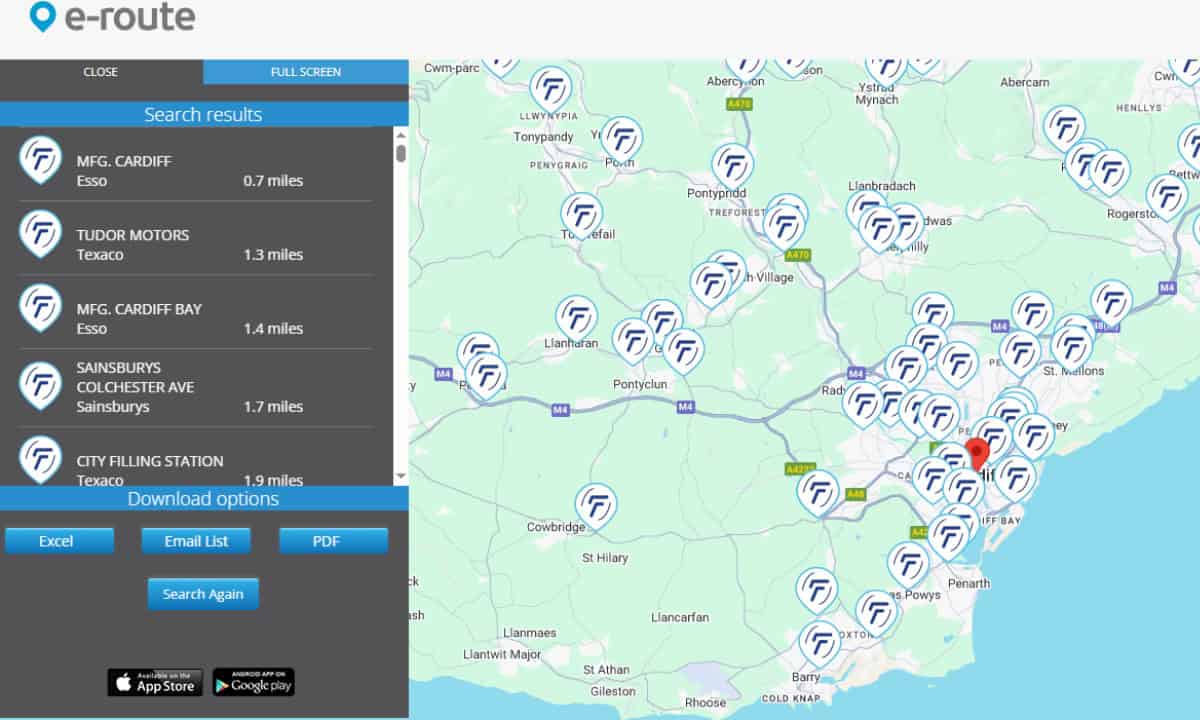
There are hundreds of fuel stations across Wales that accept fuel cards. Most fuel cards give access to national fuel networks, allowing drivers to refuel wherever is most convenient.
Major fuel brands that accept fuel cards include:
Applegreen
- BP
- Certas
- Essar
- Esso
- Gulf
- Jet
- Murco
- Oil 4 Wales
- Texaco
- Total
Many fuel cards offer fixed weekly pricing, meaning the fuel price is the same at every approved station.
You can find nearby stations using a fuel card site locator by entering your postcode or location.
What Is Velocity Fleet?
Velocity Fleet is a fleet and fuel management system designed for businesses using fuel cards. It allows you to manage fuel spending, invoices, and vehicles in one place.
With Velocity Fleet you can:
- View all fuel transactions
- Download VAT invoices
- Manage fuel cards
- Track vehicles with GPS
- Create custom reports
- Monitor driver usage
This removes the need to collect receipts and reduces time spent on admin tasks.

Comparing Fuel Card Suppliers In Wales
Different fuel cards offer different benefits depending on your business needs.
Things to compare:
- Fuel price discounts
- Station network size
- Weekly vs pump pricing
- Invoice type
- Reporting features
- Fleet management tools
Check the comparison table below to see the most recognised fuel card suppliers in Wales.
How To Get Fuel Cards In Wales
Applying for fuel cards is quick and simple. Most businesses can apply online and get approved within minutes.
Steps:
- Complete the application form
- Choose your fuel card type
- Receive your cards
- Start saving on fuel
Fill in the form below and a member of the team will contact you.
Fuel Cards For Other UK Locations
You may also want to read:
FAQ – Fuel Cards Wales
What is the best fuel card in Wales?
The best fuel card in Wales depends on where your drivers refuel and how your business operates. The right fuel card should give access to a large network of fuel stations, competitive weekly pricing, and simple invoicing to help reduce costs and admin time.
Do fuel cards save money?
Yes. Most fuel cards help businesses save money by offering fixed weekly fuel prices, reducing paperwork, and providing one VAT-approved invoice instead of multiple receipts. They also help control spending and prevent unauthorised fuel purchases.
Can small businesses get fuel cards?
Yes. Fuel cards are available for sole traders, small businesses, and large fleets. Even if your business only has one vehicle, you can still use a fuel card to simplify fuel payments and manage costs more easily.
Are fuel card accepted everywhere?
Fuel cards are accepted at selected fuel networks, but most cards give access to hundreds of fuel stations across Wales and the UK. This allows drivers to refuel at convenient locations without needing to carry cash or use personal cards.
How long does it take to get a fuel card?
Most fuel card applications only take a few minutes to complete. Once approved, cards are usually delivered within a few days, allowing your business to start using them straight away.
Marketing Manager at Fuelwise
Dominic has been covering the fuel and fleet management industry for over seven years, writing about Fuel Cards, Telematics, and Vehicle Cameras. In 2023 he was awarded the Excellence In Marketing award at the Causeway Chamber Business Awards, followed by the Best Use Of Social Media In Service/B2B at the 2024 NI Social Media Awards. You can connect with Dominic on LinkedIn here.


